What is Mathfold?
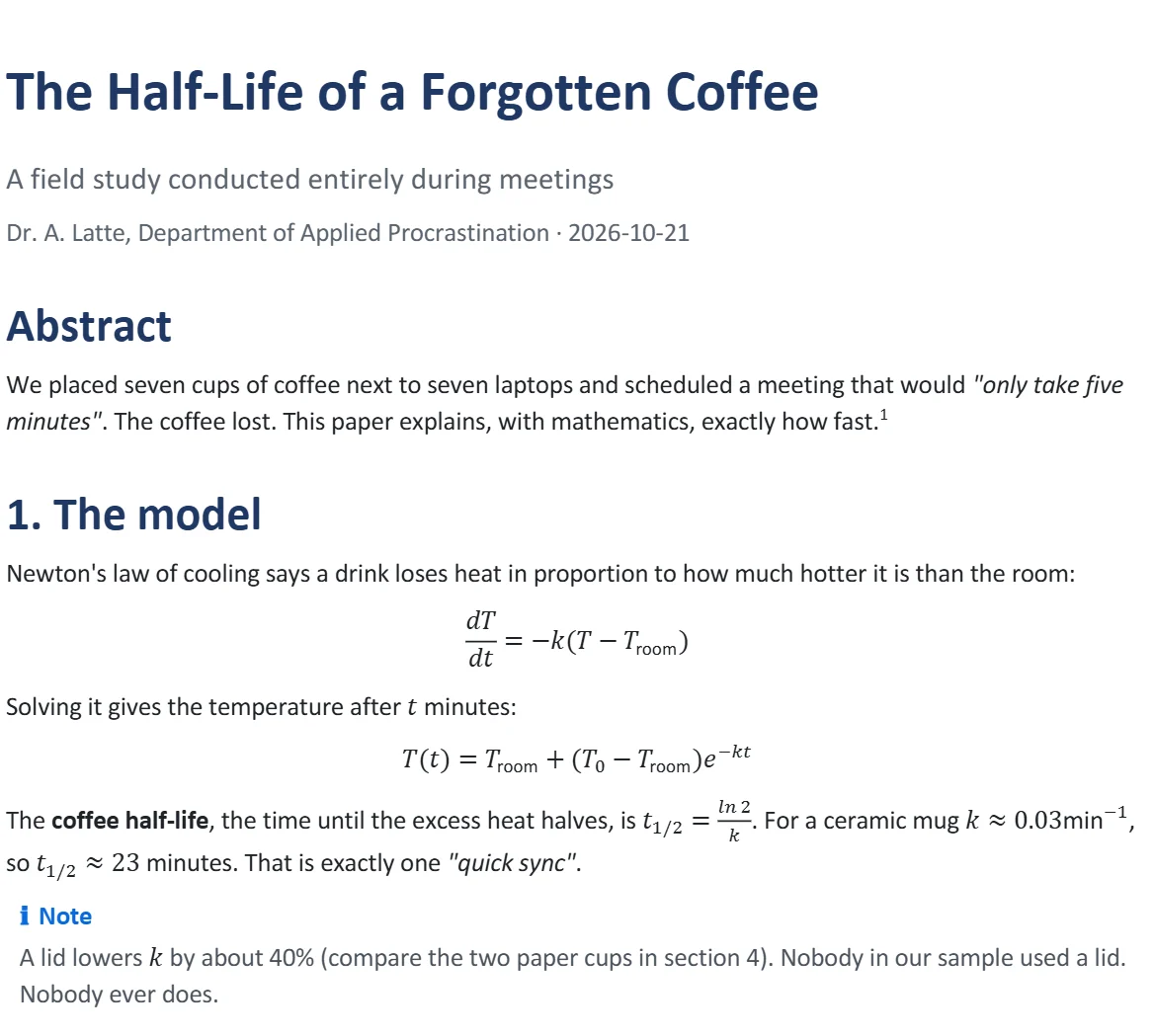
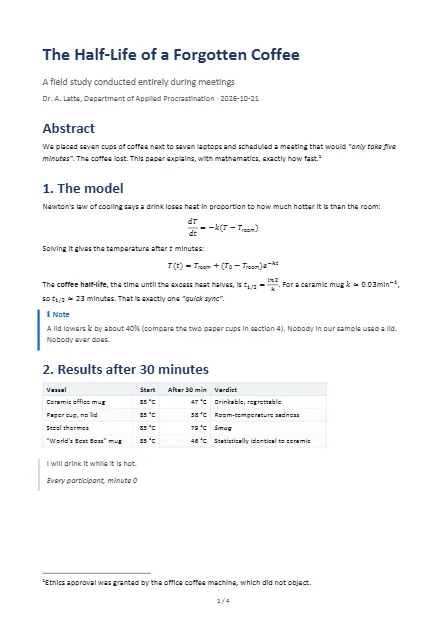
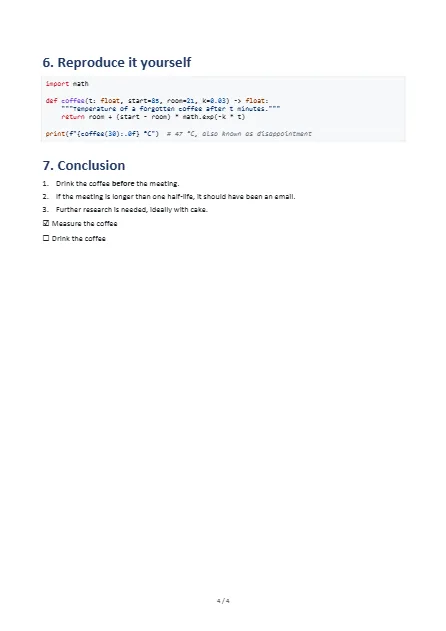
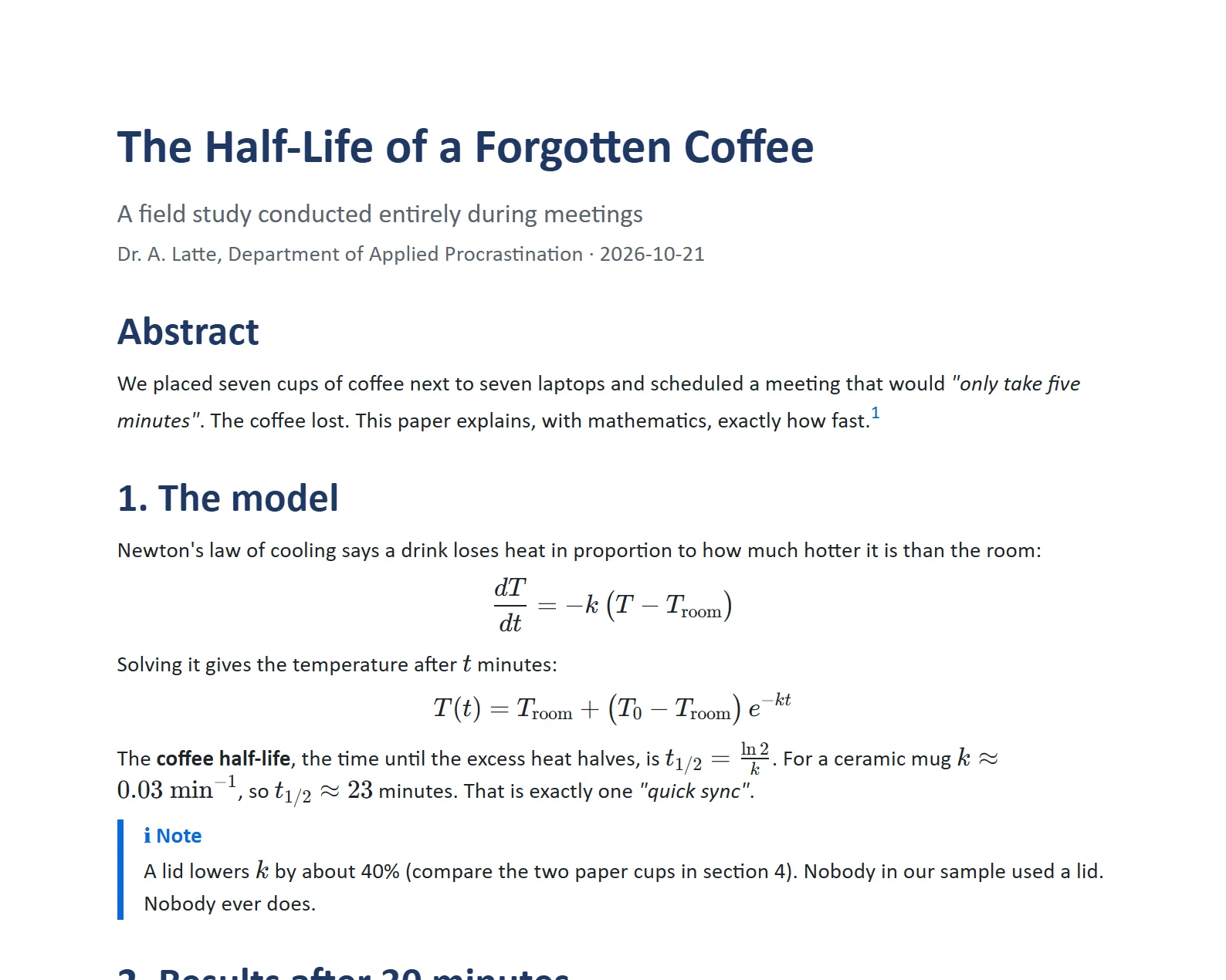
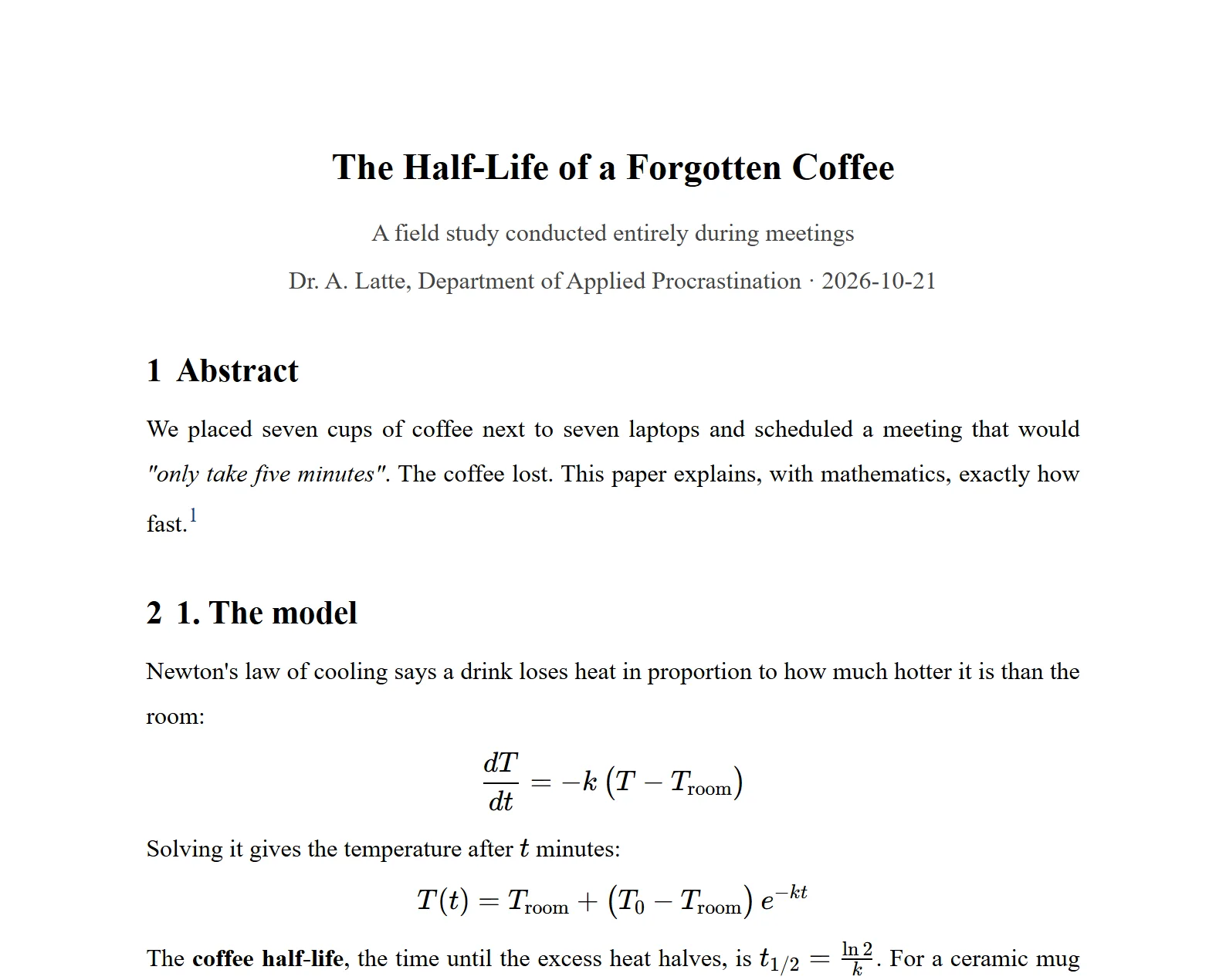
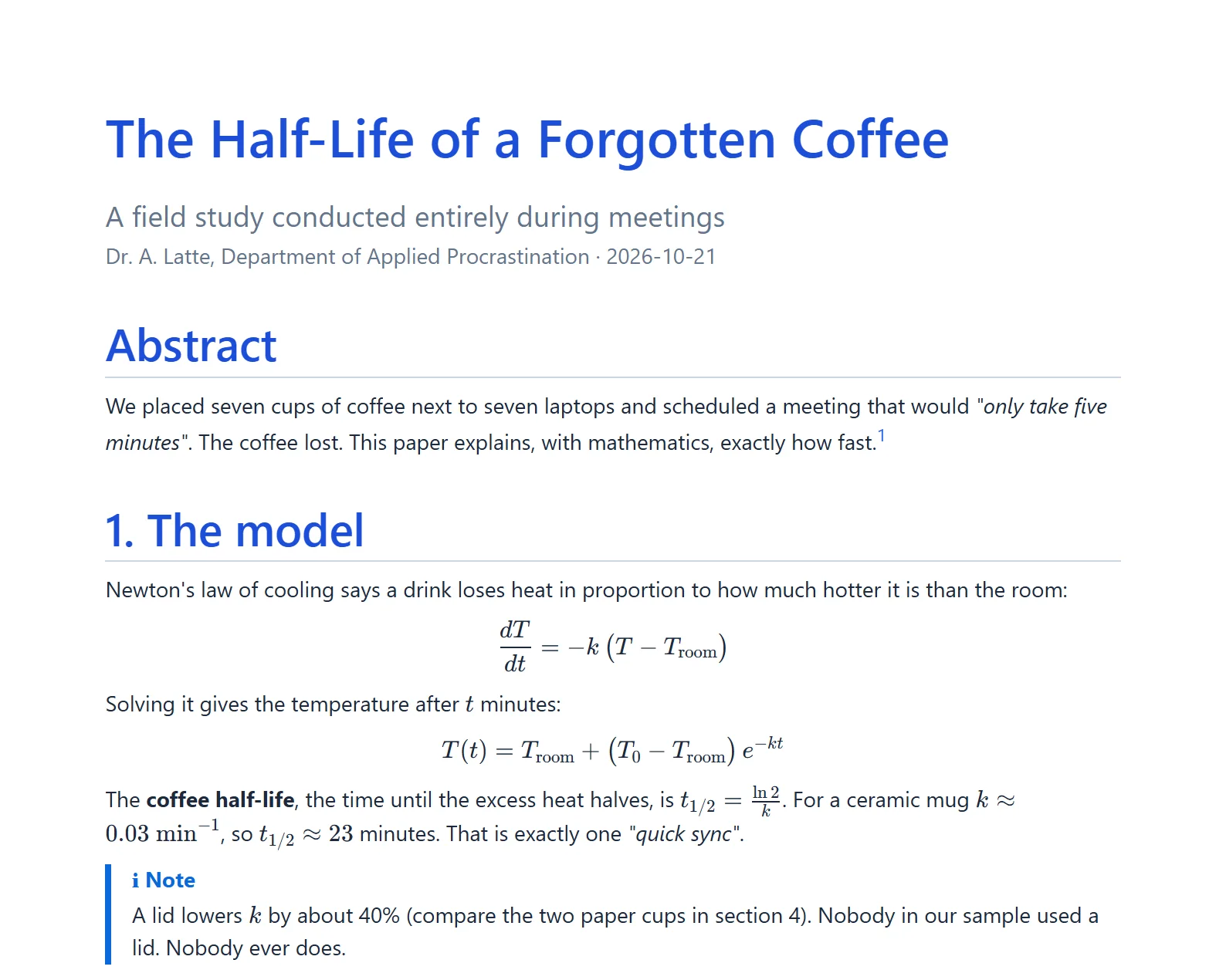
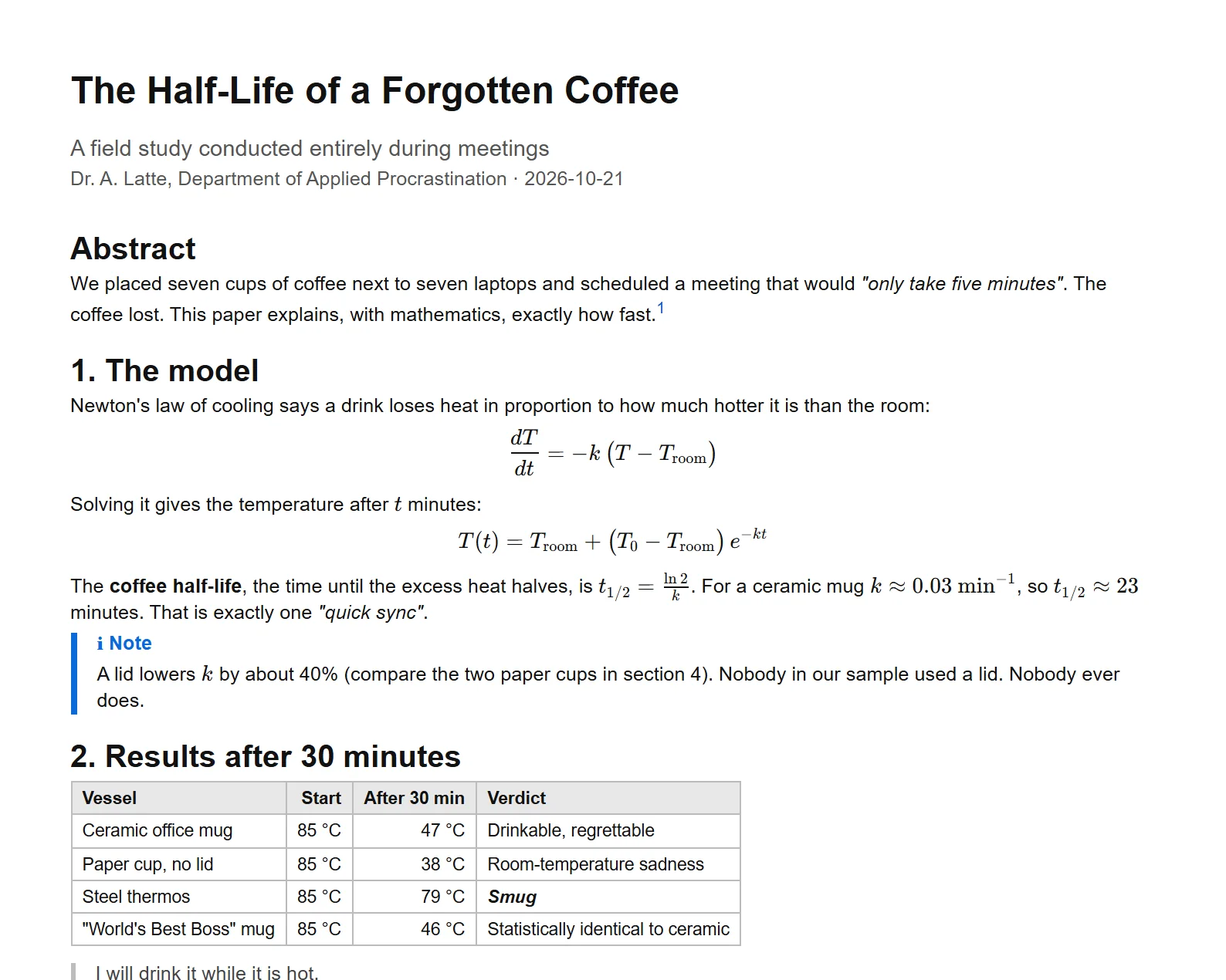
Mathfold is a web app that converts Markdown and AI chat answers from ChatGPT, Claude or Gemini into Word (.docx) and PDF files. Formulas become native, editable Word equations, wide tables get landscape pages and Mermaid diagrams are drawn automatically.
How do I convert a ChatGPT answer to Word with working equations?
Copy the answer with ChatGPT's copy button, paste it into the Mathfold editor and click Download Word. Formulas written with \( \), \[ \] or dollar signs become native Word equations that you can edit with Word's equation editor.
Are the equations editable in Word?
Yes. They are native Office Math (OMML) equations, the same objects Word creates with Insert, Equation. They also open as editable formulas in LibreOffice. They are never pasted as images.
Which formula formats does Mathfold read?
LaTeX in $…$, $$…$$, \(…\) and \[…\], bare environments such as \begin{align}, AsciiMath, MathML, JSON-escaped LaTeX from APIs, and formulas whose backslashes were lost when copying from a chat. The format is detected automatically.
What happens to tables that are too wide for the page?
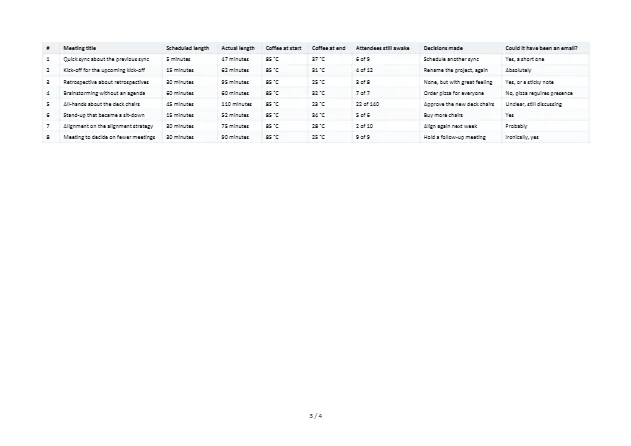
Mathfold measures every table. A table that would not fit a portrait page gets its own landscape page and the document continues in portrait after it. Extremely wide tables, such as 40 columns, are split into column groups that repeat the first column.
Does Mathfold support Mermaid diagrams?
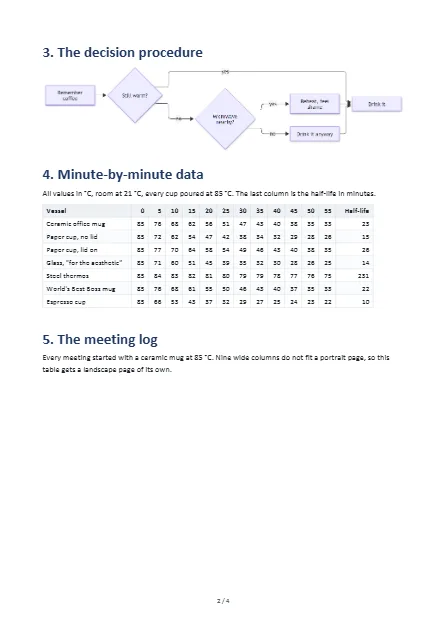
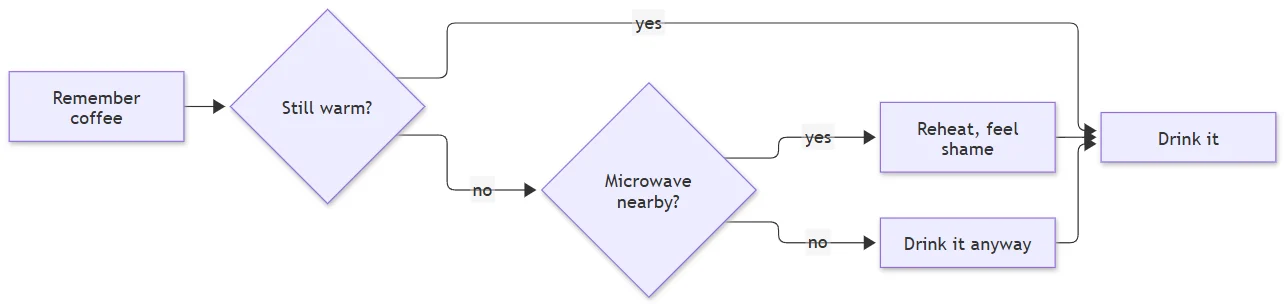
Yes. Mermaid code blocks are drawn as diagrams and sized to the page, in both Word and PDF. Wide diagrams can get a landscape page and very tall ones are scaled or split across pages.
Is there a browser extension?
Yes. The Mathfold extension for Chrome adds a Word button under each answer in ChatGPT, Claude and Gemini. It reads only the answer you click, uses the same account and plan as the website, and keeps charts and interactive widgets as pictures.
Is Mathfold free?
Yes. Your first document needs no account. After that, the free plan gives you 10 downloads a month with a Google sign-in; the first 2 have no watermark. Pro costs $4.99 a month or $39 a year and gives 300 downloads a month without watermark, all four themes and 1,000 API calls. During the launch, until 31 December 2026, every signed-in account gets Pro for free.
Is my document stored?
No. Your Markdown is converted in memory and discarded right after. Mathfold keeps only your account details, a monthly download count and anonymous daily totals such as page visits.
What does the free watermark look like?
A light diagonal "Mathfold Free" mark behind the text and a small line in the footer. Pro files have neither.
Can AI agents use Mathfold?
Yes. There is a REST API (POST /v1/convert) and a remote MCP server at https://mathfold.com/mcp with a convert_markdown tool, so Claude Code, Cursor and other MCP clients can create Word and PDF files themselves. Both use an API key from the Developers page.
How do I cancel Pro?
On your account page under Plan & billing, or from the link in your receipt email, any time. Pro stays active until the end of the period you paid for.
Who handles payments?
Paddle.com is the merchant of record. Paddle processes payments, invoices and sales tax.